01
We manage change together with you.
Before we propose anything, we go where the work actually happens. We train and strengthen the team’s knowledge, and we frame the diagnosis in numbers.
Atypical Design Studio
Working groups are a business model that allows you to get different perspectives from experts in the market.
Is this for me?
01
Before we propose anything, we go where the work actually happens. We train and strengthen the team’s knowledge, and we frame the diagnosis in numbers.
02
In working groups we prepare diverse approaches to your problem. Then we connect you with partners whose solution you choose.
03
We don’t disappear after handing over documentation. We prepare the team for change, support migration, and make sure every capability of the shipped tool is intuitive and used to the full.
Where are you?
Every engagement is built to succeed.
01
People development programmes for mid-size and large companies that know technology without competence is a cost, not an investment.
BUR · KFS · DigComp 2.2 · Training
Development programmes02
Delivery from day one. Licensed stacks, safe environments. QuickWins for SMBs means outcomes in days and weeks, not quarters — without a giant programme or a long contract.
Automation · Integrations · First AI steps
Minimal sensible pilot (PoC)03
You have a shop floor, machines and data you don’t use? Integrate the knowledge and unlock the potential of what you already have.
Computer vision · Edge computing · Prediction · AI in industry
Data & ML programme04
Two-day programme: LLM fundamentals, privacy and licensing, Claude surfaces (Chat, Cowork, Design, Code), Projects, Connectors/MCP, Skills — and responsible use in the team.
Claude · MCP · Skills · Enterprise
Claude + MCP training05
Architecture design and solution choices for companies with internal teams and infrastructure. We join as advisors and fit your design and delivery process.
Architecture · Due diligence · Vendor selection
Technical architecture06
Augmentation supports your own work — for owners, managers and specialists who want to work smarter without giving up control. Tools that strengthen how you think, not replace it.
Prompting · AI workflows · Personal work systems
Augmenting your own work03 · Case study
We don’t define projects through a tools-first lens. We look at what changes for the client — and what should stay unchanged.
Vision
Form
Intelligence
Process
We do not start with a single forced path — first we understand your situation, then we show sensible options within your budget.
Report your problem
Proposal of first steps
Internal training
We assemble a working group
You receive up to 3 solutions and approaches for your problem within your budget
Training enrollment

Book your seat at training
Announcement
Blog
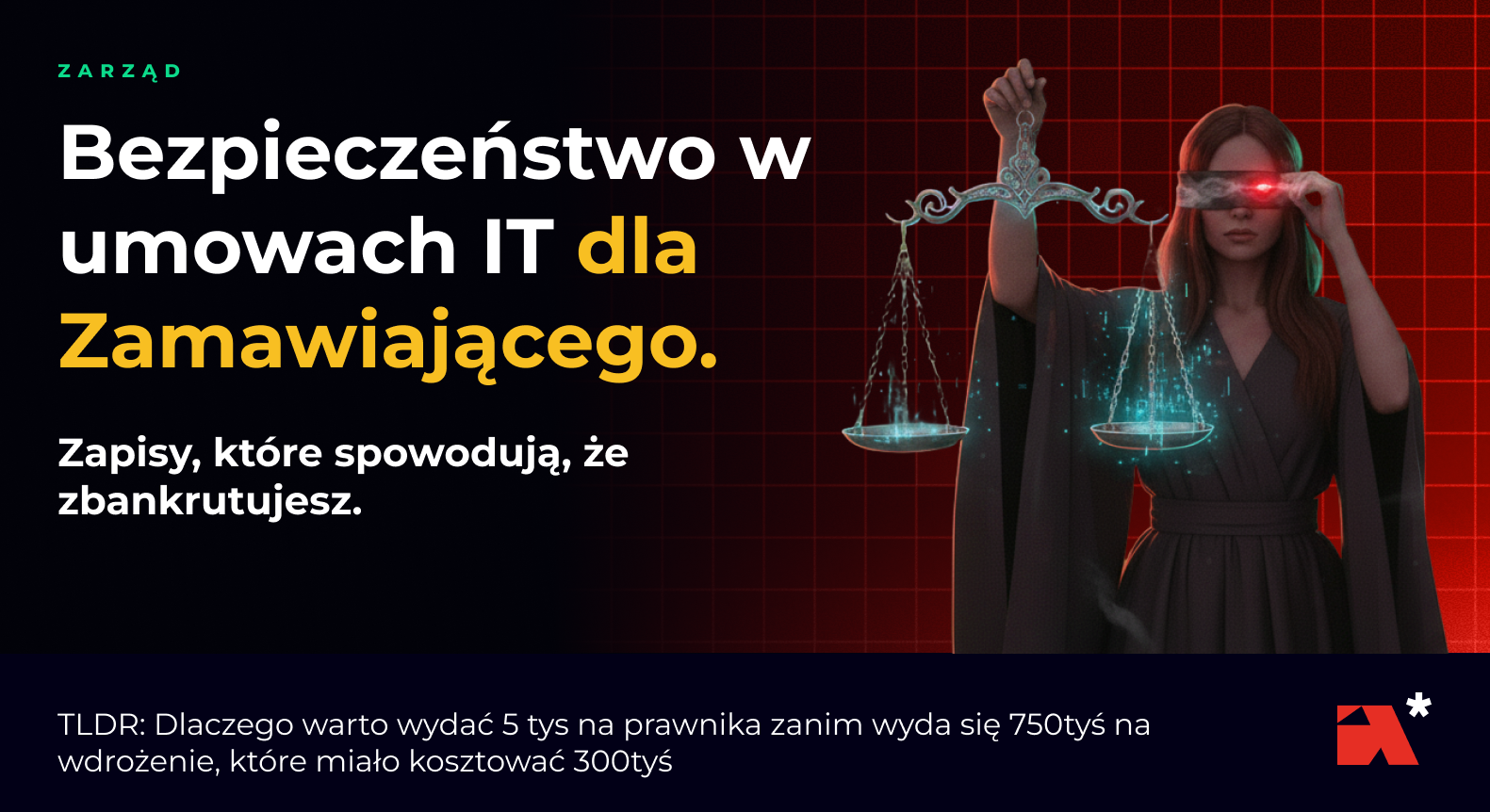
Check whether your contract is not a machine built for long-term milking of the client.

Blog
From the WordPress era to GPT, we keep running into the same pattern.
Announcement
Announcement
Announcement

Blog
For eighteen months you may pay senior invoices while getting a translator. Here is how to shorten that runway and grow architects inside the organisation.
Announcement

Blog
When a narrow ML model is a bullseye, what a language calculator is, why training your own LLM on contracts is a blind alley, and three questions before you spend the budget.
Announcement

Blog
New stack, new UI — and the same friction on pricing, logistics, and data. A “what you are importing” checklist, four moves before the RFP, and one numeric question before you sign.
Announcement

Blog
Technical debt is a ledger of past trade-offs. When nobody is left to fight fires, the culprit is often a chain of earlier shortcuts — not headcount alone.
Blog
Solutions
Products and working-group projects — click through to explore.
Voice CRM · CarPlay · field
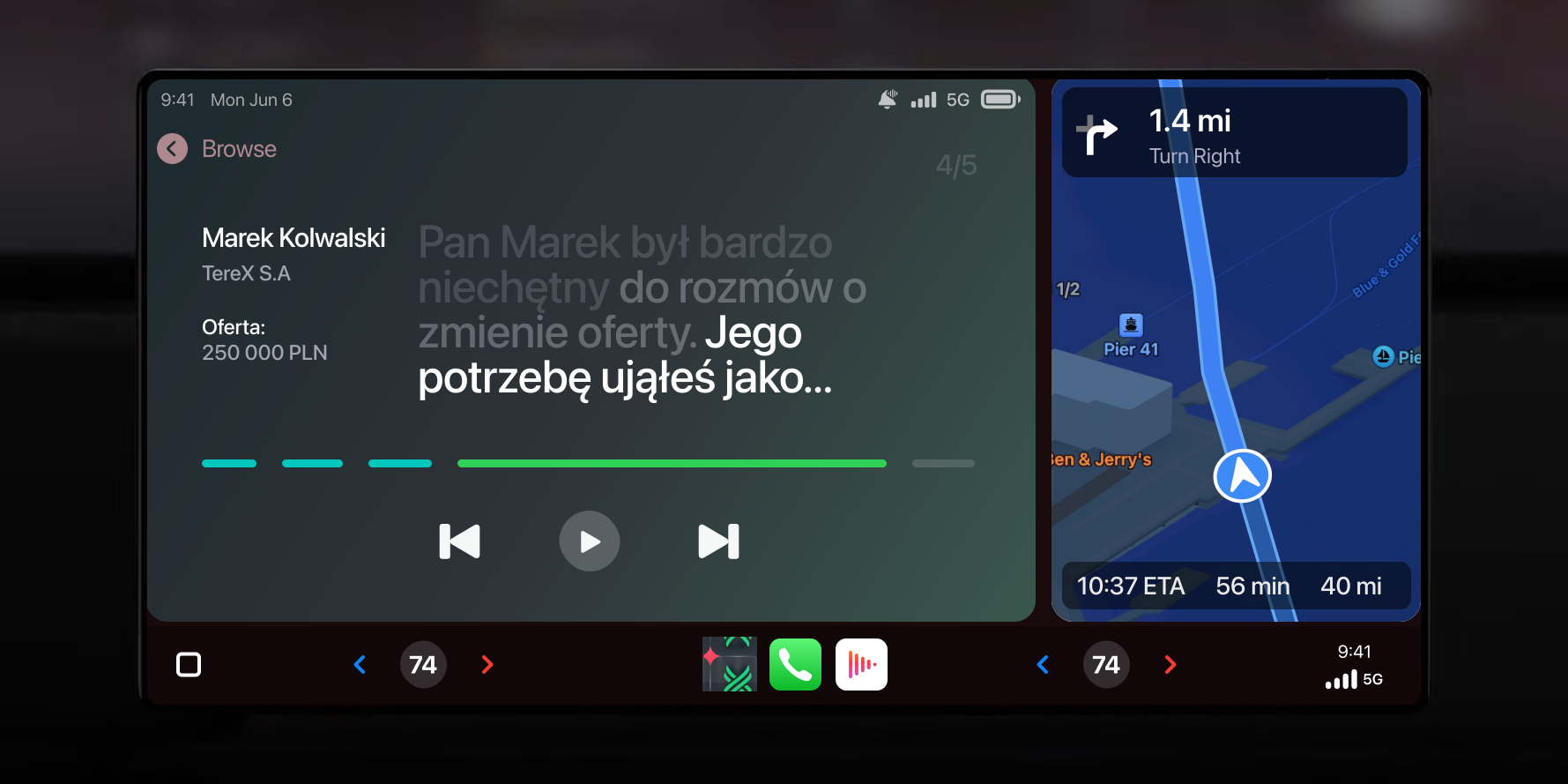
The invisible CRM for field teams — a voice note after a meeting becomes client knowledge.
See Alint →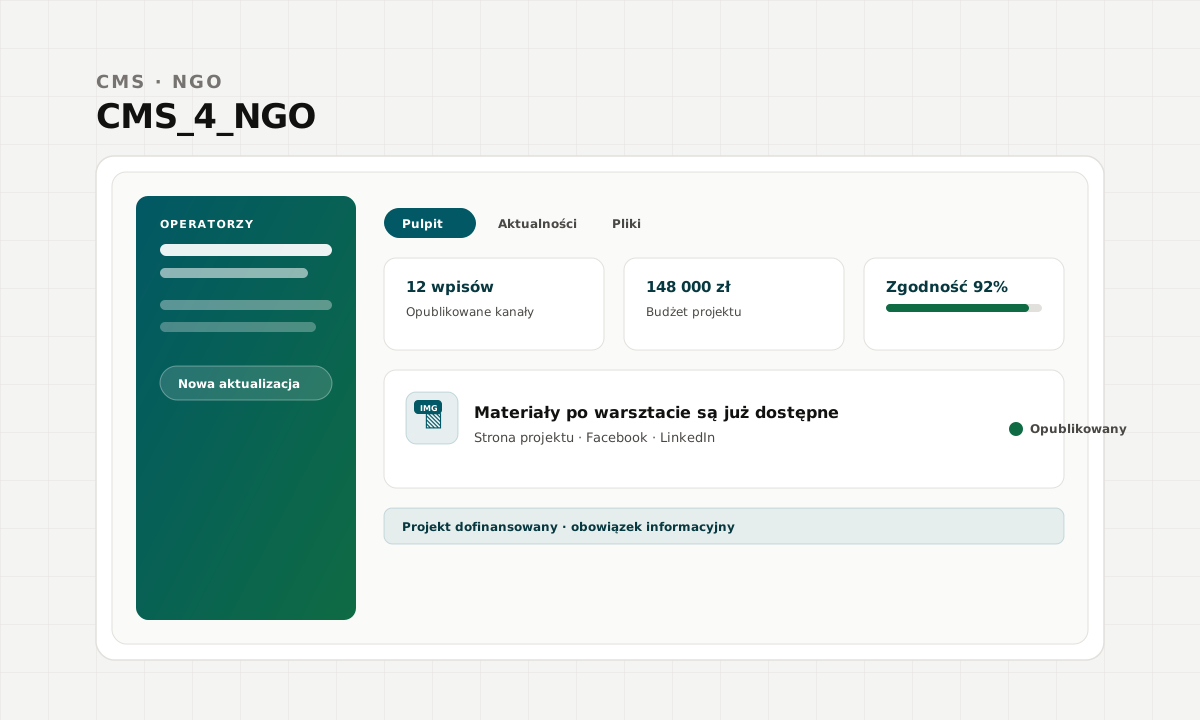
CMS · NGO · reporting
Green Morning NGO CMS — updates, disclosure duties and project history from day one.
Open the preview →
Measurement · production · ROI
Measurement and classification in production — savings estimates instead of manual counting.
See Helverth →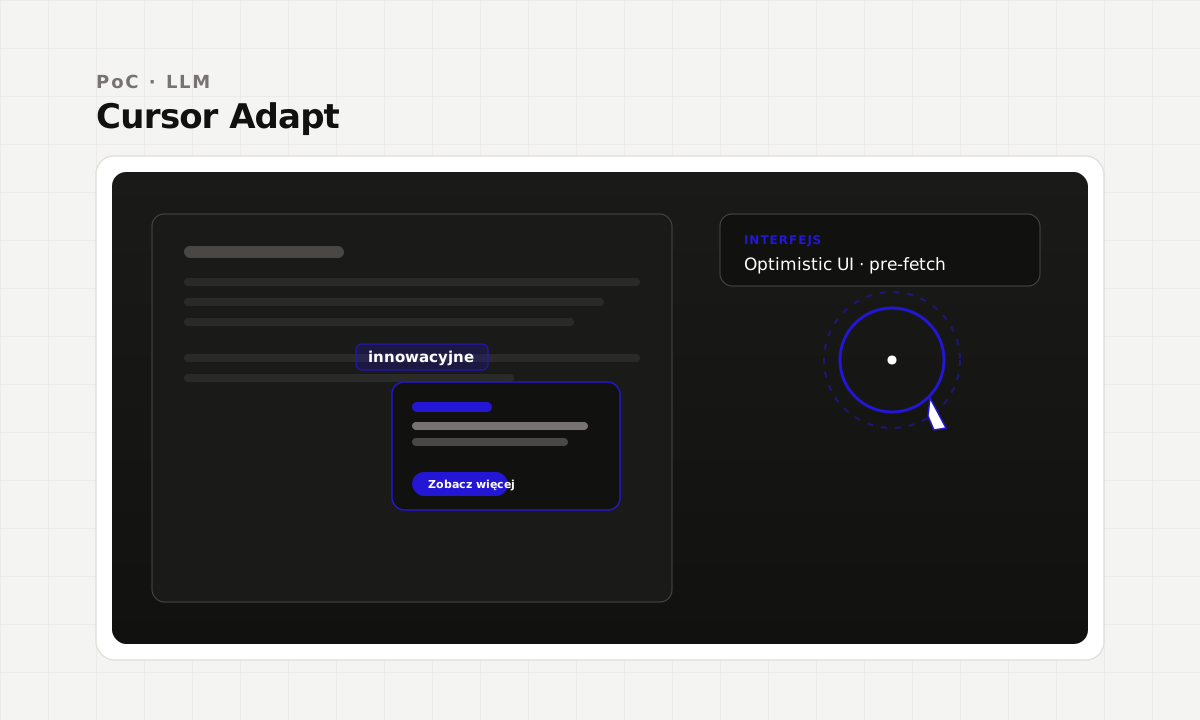
PoC · LLM · contextual reading
Contextual cursor — every word becomes a knowledge node. Optimistic UI and pre-fetch mask AI latency.
Open the PoC →Case studies
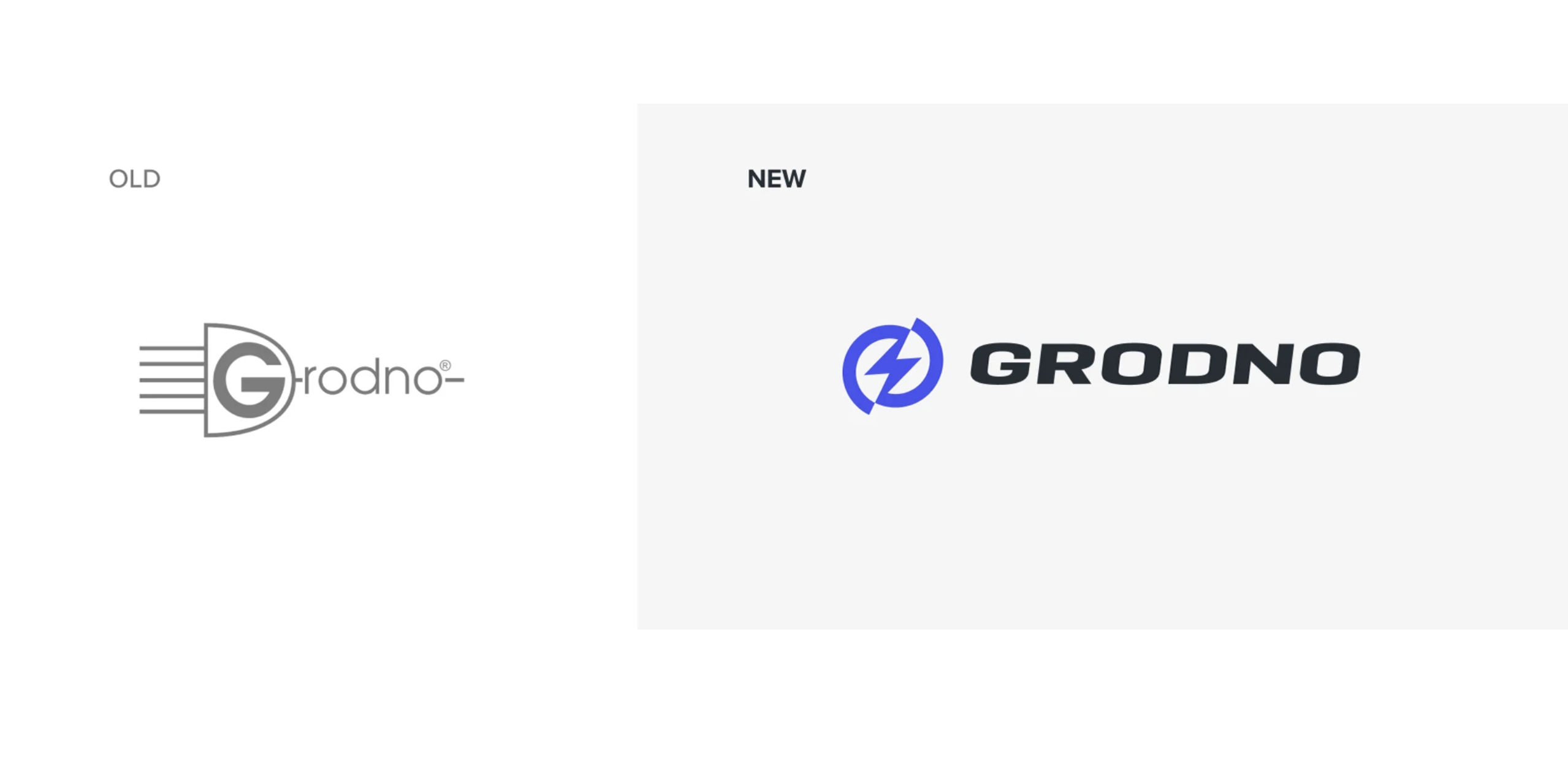
New brand strategy & rebrand · 2020
2020. Poland’s largest electrical wholesaler. Thirty years on the market, eighty‑eight branches. The category was shifting — renewables, photovoltaics, EV charging, new partner types at the table.
Together with Grodno we designed a new mark and guided them through the change — because visual change without human change is just a new PDF. Seven hundred people had to feel the new direction was theirs, not imposed from outside.
Revenue growth is the work of a whole organisation. The rebrand was one element of that story — not its cause. Data: GPW: GRN.
B2B2C platform delivery + sales prediction
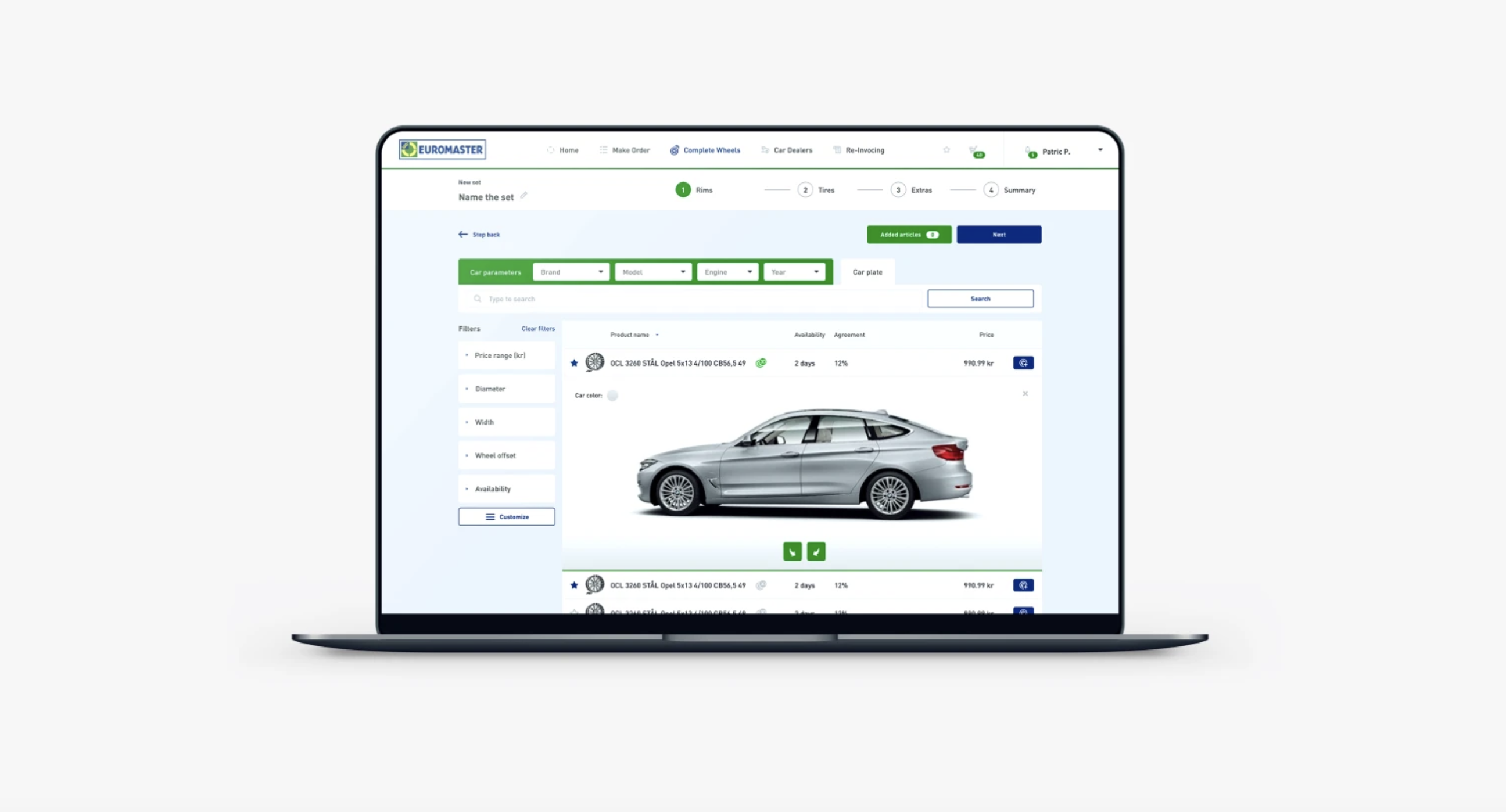
Delivered with Frontkom. Euromaster (Michelin Group) was serving B2B customers, dealers and franchisees through a collection of disconnected systems. At peak season, the team was spending thousands of hours re-entering data between platforms.
We delivered a unified B2B2C platform combining sales, invoicing and document flow — integrated with external tooling. The Laravel backend supports complex discount structures and re-invoicing logic.
Delivered by Frontkom with UX by Atypical Design Studio.
Back‑office SaaS — audit & MVP redesign
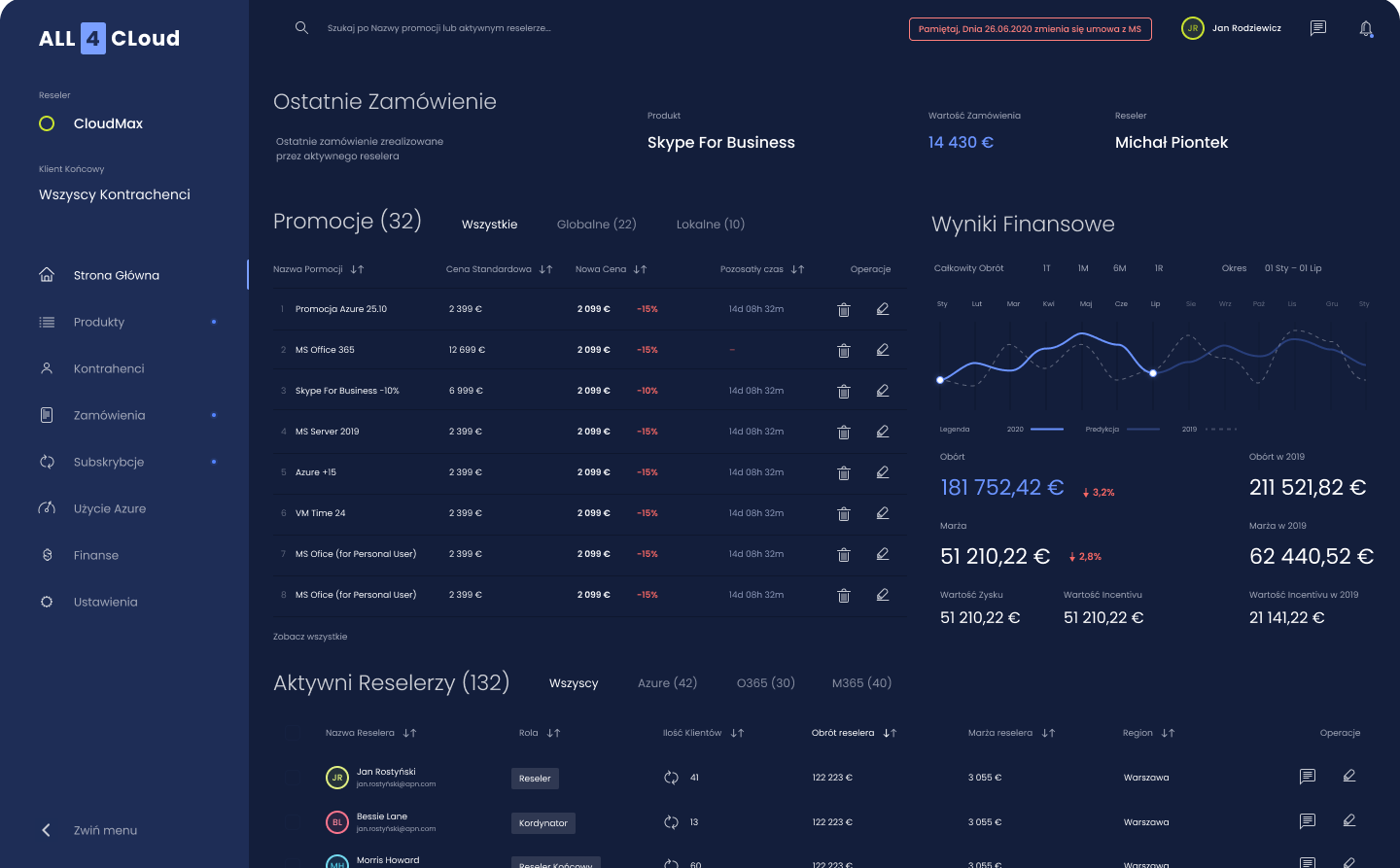
All4Cloud is a Microsoft licence back-office serving administrators, resellers and tenants. Built over years by an internal team alone. At scale, it began to buckle: navigation three levels deep, expiring contracts buried, campaign conflicts, licence errors distributed across the interface with no apparent logic.
Twenty-five working days. Audit, UserTasks workshop, Blueprint Model, TreeJack testing via Optimal Workshop, MVP in Figma. Output: a Critical Actions panel, simplified approval workflow, granular role permissions, dark mode, and redesigned data tables with sticky headers, horizontal scroll, and components drawn from Material and IBM Carbon.
Does this sound familiar?
Whatever your context above — these are the patterns that keep showing up in the same rooms.
Scenario 01
The less defined your objective, the more you pay for someone else’s peace of mind about their own uncertainty.
Your subcontractor protected themselves from every risk they could see. No one at the table was protecting you.
Scenario 02
Nine months of work. Impressive demonstration. Three months later, the system collects dust — because it was never designed around how people actually work, and fails in roughly thirty per cent of real cases.
AI without Gemba is simply a fashionable solution searching for a problem to justify it. AI is not always the answer.
Scenario 03
In eighty per cent of cases, a genuine brand change is an internal one: it must reshape sales operations, processes and the way people behave day to day. It must serve B2B, B2C and the team simultaneously.
A new colour palette and a generative‑AI wordmark will not change how an organisation thinks — nor give it a direction worth thinking about.
Scenario 04
Shipped. Budget spent. Customers calling with complaints. Accessibility was never built in. Retrofitting it costs three times as much — plus the ongoing operational cost while customers wait.
WCAG is not a compliance checkbox. It is a quality threshold. And it is considerably cheaper as a first-day decision than a last-day apology.
Scenario 05
It worked. The customer could complete a purchase in thirty seconds. Technically, a success. Nobody asked why the drop-off rate keeps rising, or why average order value has been falling quietly for two years.
Commerce is not a button that says “Buy now.” It is everything that happens in the customer’s mind before they consider clicking it.
Scenario 06
The migration consumed eight months and an entire two-year budget. A year later, the new platform carried the same problems as the old one — because nothing in the organisation around it had changed.
The constraint is rarely the platform. More often, it is the absence of a clear plan for what the platform was supposed to enable.
05 — How we work
We do not work from a catalogue. Every engagement begins with a single question: what must this organisation be prepared for in three years — and what, precisely, stands in the way?
Gemba — Japanese for “the real place.” We go where work actually happens, not where reports about it are compiled. We diagnose in numbers, not in adjectives.
The problems we find at Gemba are almost never the ones the client described in the first meeting.
Gemba — go to the floor
User interviews, process observation, shadowing.
Numbers-first diagnosis
Time, cost, risk. We define the problem measurably before proposing anything whatsoever.
Minimal intervention
We select tools to fit the problem. No single methodology serves every situation.
We stay to the end
We support implementation and return with a report: did the change produce the outcome it was designed to produce?
We design strategy and communication for organizations entering a new chapter—new market, new offer, new partner. We answer: what must the company be ready for in three years? How will customers, employees and partners react?
We don’t do greenwashing. We audit reality first—then build a step-by-step transition you can defend.
Strategy workshop
An extended sprint with leadership. Intensive work on direction and decisions.
Qualitative research
Focus groups + 1:1 interviews about vision, constraints and real blockers.
Comms & reach audit
Channels, message effectiveness, brand monitoring and awareness signals.
Training cycle (optional)
Quarterly program for leadership: change management, tech horizon, expert panels.
Engage people in change
Soft rollout of participation; optional internal transformation leads.
Recommendations & rollout plan
Internal + external comms plan, and clear guidelines for agencies.
Pilot
Implementation + monitoring for 3–9 months; for ESG companies—extended financing advisory.
ESG reporting is increasingly a regulatory obligation—and often a requirement to enter supply chains. We build ESG matrices from scratch: baseline audit, KPI mapping to ESRS/GRI, and a plan you can defend to an auditor.
Companies that start ESG with comms instead of data—pay twice.
Baseline audit
Data collection: emissions, energy, supply chain, policies, governance—no polishing.
Reporting framework
ESRS (CSRD), GRI, UN SDGs—fit to your obligations and industry.
KPI matrix
Measurable indicators for E/S/G with data sources and cadence.
Gaps & remediation plan
Where data is missing or below threshold—realistic timeline and owners.
Report & documentation
Ready for publishing and financing conversations; audit-friendly trail.
OPEX grows not from bad intent but from processes designed for another scale, team or market. We map flows and identify where the organization pays for chaos. Recommendations always come with numbers.
The most expensive process is the one nobody questions because “we’ve always done it this way”.
Process mapping
Value stream mapping—where waiting, handoffs and waste live.
OPEX analysis
We break costs by concrete actions—not departments.
Bottlenecks
Where does flow stop? Which decisions are made too high or too low?
Recommendations with a bill
Effort/impact prioritization with estimated change cost and return.
Implementation & monitoring
We track results after 30/60/90 days and adjust based on data.
Implementations fail not because tools are bad, but because the organization isn’t ready. We audit digital capability by teams and roles—not job titles—and design development paths for real gaps.
Digitalization without capability is buying gym equipment nobody uses.
Digital capability audit
Gap analysis with DigComp 2.2 and industry context.
Roles & gaps map
Required level per role and what blocks transformation.
Learning paths
Microlearning, shadowing, practical workshops—fit to the gap.
Pilot program
Measure capability change before/after; scale what works.
Internal digital leaders
Develop ambassadors so the organization can grow without us.
We keep a proven toolkit and know when to use what. ML background (2018), VUI/CarPlay/chatbots/computer vision before they became fashionable. Currently building Alint—voice CRM assistant for field sales on CarPlay.
We’re often 2–3 years ahead of clients. That’s not an accident.
UX & Interaction Design
Design systems, information architecture, research, prototyping.
VUI — Voice User Interfaces
CarPlay, mobile voice, conversational assistants.
AI implementation
Readiness audit, automation, LLM integrations, AI agents.
WCAG 2.1 / 2.2
Accessibility audits, inclusive design, public-sector statements.
06 — Projects
Some projects are active. Some are concepts that never launched—each left a method we still use.
Voice CRM assistant on Apple CarPlay for field sales. A 3‑minute voice session instead of evening form filling. Supported by WA‑MA incubator grant.
A sports/streetwear brand for teens. Bold geometric language and authenticity-driven communication.
Electronic jazz festival identity and comms system for a project that never launched—method survived.
Premium tea packaging UX and identity—where physical experience meets digital communication.
F1 telemetry visualization for fans and analysts—turning technical data into narrative without engineering background.
In collaboration with Aleksander Zawalich
Racing betting system—UX designed responsibly in a space that typically designs for addiction.
08 — Before you write
We work with organisations that sense their category is moving — and wish to be prepared before the rest of the market notices.
Twenty minutes. Three questions. We will know whether we can help.
connect@atypical.pl Book a conversation